

Launching an online store is just the beginning of your eCommerce journey. The real challenge lies in attracting the right audience, standing out from thousands of competitors, and converting visitors into loyal customers. With millions of online stores competing for attention, simply having a well-designed website isn’t enough. If your products don’t appear in search engine results, potential customers may never discover your business.
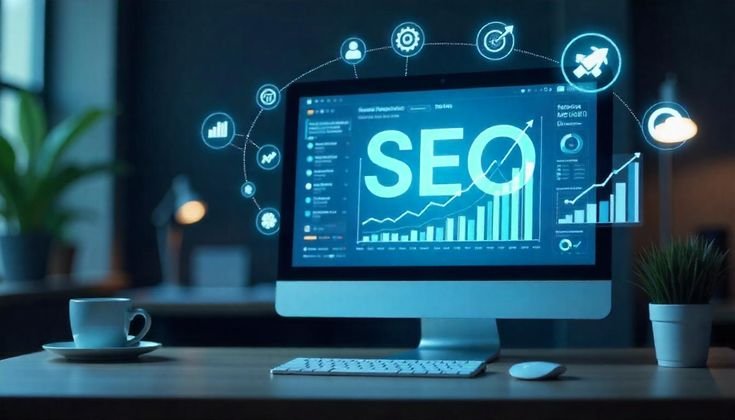
This is where Search Engine Optimization (SEO) plays a crucial role. SEO is the process of optimizing your online store so that search engines like Google can easily understand, index, and rank your website for relevant searches. Unlike paid advertising, SEO provides long-term visibility by helping your products and category pages appear organically when customers search for what they need.
Why SEO Matters for an Online Store
Every online purchase begins with a search. Whether customers are looking for clothing, electronics, furniture, or software, they usually start by searching on Google or another search engine. If your online store appears on the first page of search results, you’re far more likely to receive clicks, traffic, and sales.
SEO helps businesses attract customers who are actively searching for products, making it one of the most cost-effective digital marketing strategies. Instead of relying solely on paid advertising, a well-optimized online store continues to generate organic traffic over time, reducing customer acquisition costs while increasing brand visibility and trust.
Additionally, SEO improves the overall shopping experience by making your website faster, easier to navigate, and more informative factors that not only please search engines but also encourage visitors to become paying customers.
Start with Comprehensive Keyword Research
The foundation of every successful SEO strategy is understanding what your customers are searching for. Keyword research helps identify the exact words and phrases potential buyers use when looking for products online.
Instead of targeting broad, highly competitive keywords, focus on long-tail keywords that reflect customer intent. For example, someone searching for “wireless Bluetooth headphones for running” is much closer to making a purchase than someone simply searching for “headphones.”
Use keyword research tools to discover high-volume, low-competition search terms and naturally incorporate them into your product titles, category pages, URLs, headings, image alt text, and product descriptions.
Use Internal Linking Strategically
Internal linking helps both users and search engines navigate your website more effectively. Linking related products, categories, blogs, and buying guides encourages visitors to explore additional pages while distributing SEO value throughout your site.
For example, a product page can link to related accessories, comparison guides, or installation tutorials. Likewise, blog posts can naturally direct readers toward relevant products that solve their problems.
A strong internal linking strategy improves user engagement, increases session duration, and supports better search engine crawling.
Improve Website Speed and Performance
Website speed has a direct impact on both search rankings and customer satisfaction. Slow-loading pages frustrate users, increase bounce rates, and reduce conversions.
Optimize your online store by compressing images, enabling browser caching, minimizing CSS and JavaScript files, and using a reliable hosting provider or content delivery network (CDN). Mobile users, in particular, expect pages to load quickly, and even a few seconds of delay can result in lost sales.
Fast websites create a smoother shopping experience while sending positive signals to search engines, ultimately improving rankings.
Build High-Quality Content Around Your Products
Content marketing plays an essential role in eCommerce SEO. Beyond product pages, businesses should create informative blog articles, buying guides, tutorials, comparison posts, and frequently asked questions that answer customer concerns.
For example, if you sell fitness equipment, publishing articles such as “How to Choose the Best Home Treadmill” or “Top Home Workout Equipment for Beginners” can attract customers who are still researching before making a purchase.
Educational content builds trust, improves topical authority, and creates opportunities to naturally link visitors to relevant product pages.
Build High-Quality Backlinks
Earn backlinks by publishing valuable content, collaborating with industry influencers, contributing guest articles, listing your business in trusted directories, and sharing research or case studies that others naturally reference.
Quality always matters more than quantity. A few authoritative backlinks often provide more SEO value than hundreds of low-quality links.
Use Internal Linking Strategically
Internal linking helps both users and search engines navigate your website more effectively. Linking related products, categories, blogs, and buying guides encourages visitors to explore additional pages while distributing SEO value throughout your site.
For example, a product page can link to related accessories, comparison guides, or installation tutorials. Likewise, blog posts can naturally direct readers toward relevant products that solve their problems.
A strong internal linking strategy improves user engagement, increases session duration, and supports better search engine crawling.
Monitor SEO Performance and Continuously Improve
SEO is an ongoing process rather than a one-time project. Regularly analyze your website’s performance using tools such as Google Analytics and Google Search Console to understand visitor behavior, keyword rankings, click-through rates, and conversion performance.
Identify pages with declining traffic, optimize underperforming product descriptions, update outdated content, and test different calls-to-action to improve conversions. Continuous optimization ensures your online store remains competitive as search engine algorithms and customer behavior evolve.
Conclusion
Optimizing your online store for SEO is one of the most effective ways to increase organic traffic, improve search rankings, and drive more conversions without relying entirely on paid advertising. By combining comprehensive keyword research, high-quality product content, technical optimization, fast website performance, mobile responsiveness, and valuable content marketing, businesses can create an online store that attracts both search engines and potential customers.