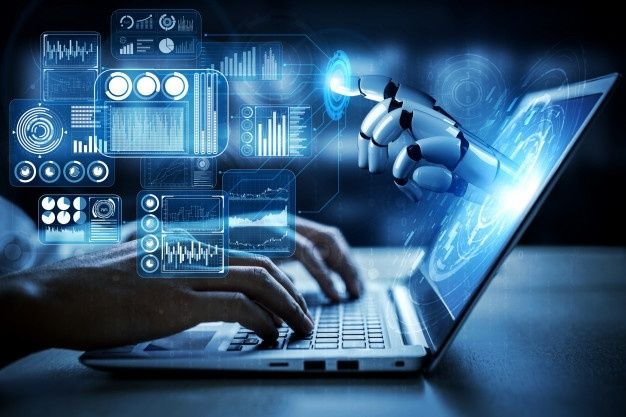



Technology has always played a major role in shaping the way conflicts unfold, and today, Artificial Intelligence is changing the rules faster than ever before. What was once viewed primarily as a tool for automation and innovation has now become an influential force in digital security. From identifying suspicious network activity to generating highly convincing phishing campaigns, AI is transforming both how organizations defend themselves and how cybercriminals launch attacks.
This dual nature has made AI in Cybersecurity one of the most important topics in the technology industry. The same algorithms that help security teams detect attacks in real time can also be used by attackers to automate reconnaissance, evade detection, and create increasingly sophisticated cyber campaigns. As a result, artificial intelligence has become both a powerful shield and a dangerous weapon in modern Cyber Warfare.
Understanding AI in Cybersecurity
AI in Cybersecurity refers to the use of intelligent algorithms and machine learning techniques to detect, analyze, and respond to security incidents. Unlike traditional security tools that rely heavily on predefined rules, AI can process enormous volumes of data, identify unusual behavior, and recognize emerging attack patterns much faster than humans.
Organizations are using AI to monitor network traffic, identify suspicious user activity, detect malware, and automate incident response. These capabilities allow security teams to react more quickly and focus on higher-priority threats instead of spending valuable time on repetitive tasks.
However, the same technological advances are also being exploited by cybercriminals. AI can automate attack planning, improve phishing campaigns, and identify vulnerabilities at a speed that was previously impossible. This growing imbalance is changing the nature of digital conflict. How AI Is Transforming Cyber Warfare
Modern Cyber Warfare is no longer limited to isolated hacking attempts. Nation-states, organized cybercrime groups, and highly skilled attackers are increasingly incorporating AI into their operations to improve speed, accuracy, and scale.
Instead of manually scanning networks for weaknesses, attackers can use AI to identify vulnerable systems within minutes. Machine learning models can also generate convincing phishing emails, mimic writing styles, and even produce realistic voice or video deepfakes that manipulate victims into revealing sensitive information.
On the defensive side, governments and businesses are deploying AI-powered monitoring systems capable of identifying abnormal behavior before significant damage occurs. By continuously analyzing user activity, network traffic, and system performance, these tools help security teams detect attacks earlier and respond more effectively.
The result is a constantly evolving digital battlefield where both attackers and defenders are relying on increasingly intelligent technologies.
The Benefits of AI for Cyber Defense
Despite the risks, AI has become one of the most valuable tools available for modern Cyber Defense. Security teams receive millions of alerts every day, making it nearly impossible for human analysts to investigate every event. AI helps by filtering large volumes of data, identifying genuine threats, and reducing false alarms.
Automation also improves response times. Instead of waiting for manual investigation, AI systems can isolate compromised devices, block suspicious connections, and alert security teams within seconds. This rapid response significantly reduces the potential impact of many cyber incidents.
Another important advantage is predictive analysis. By learning from historical attack patterns, AI can identify emerging Cyber Threats before they become widespread. This proactive approach enables organizations to strengthen their defenses rather than simply reacting after an attack has occurred.
The Risks of AI in Cybersecurity
While AI strengthens security, it also creates new challenges. Cybercriminals now have access to tools that can generate malicious code, automate password attacks, and develop increasingly convincing social engineering campaigns. Deepfake technology makes impersonation attacks more believable, while AI-powered malware can adapt its behavior to avoid detection.
There is also the risk of overreliance on automation. AI systems are only as effective as the data they are trained on. Poor-quality data, biased algorithms, or incorrect configurations can lead to false positives, missed attacks, or unnecessary disruption. Human expertise remains essential for interpreting results, making strategic decisions, and responding to complex incidents.
These realities reinforce the idea that AI in Cybersecurity is neither entirely beneficial nor entirely dangerous. Its impact depends largely on how it is developed, managed, and deployed.
Building a Stronger Security Strategy
Organizations should view AI as a tool that enhances human expertise rather than replacing it. Combining intelligent automation with experienced security professionals creates a more balanced and resilient approach to defending digital assets.
Regular employee awareness training remains equally important. Many successful attacks still begin with phishing emails or stolen credentials, and no AI system can completely eliminate the risk created by human error. Businesses should also conduct regular security assessments, maintain strong access controls, and continuously monitor their environments to identify unusual activity before it escalates.
By integrating AI responsibly into existing security strategies, organizations can improve resilience without becoming overly dependent on automation.
Building a More Sustainable Future
Creating greener cloud environments is not simply about installing new hardware. It requires a thoughtful strategy that combines efficient technology with responsible business practices. Organizations that regularly evaluate their Cloud Infrastructure, optimize resource usage, modernize applications, and invest in cleaner energy sources are better positioned to reduce costs while improving environmental performance.
Even small improvements can make a meaningful difference over time. As businesses continue to expand their digital operations, every step toward greater efficiency contributes to a more sustainable future.
The Future of AI in Cybersecurity
The role of AI in digital security will continue to expand as technology becomes more advanced. Future systems will likely detect attacks faster, automate more security operations, and provide deeper insights into emerging Cyber Threats. At the same time, attackers will continue using AI to develop more sophisticated methods for bypassing traditional defenses.
This ongoing competition between offensive and defensive technologies will define the next generation of Cyber Warfare. Success will depend not only on adopting advanced tools but also on ensuring they are supported by skilled professionals, ethical practices, and strong governance.
Conclusion
The rise of Artificial Intelligence has fundamentally changed the cybersecurity landscape. It empowers organizations to strengthen Cyber Defense, detect threats more quickly, and automate complex security tasks. At the same time, it provides cybercriminals with new ways to launch sophisticated attacks and exploit vulnerabilities.
The future of AI in Cybersecurity will be shaped by how responsibly organizations use these technologies. Businesses that combine intelligent automation with experienced professionals, continuous monitoring, and strong security practices will be better prepared to face the evolving challenges of modern Cyber Warfare and protect themselves against increasingly advanced Cyber Threats.