Which Java versions does Java4Shell affect, and how to check?
Calif scores CVE-2026-114938 at 9.2. OpenJDK's own risk matrix scores it 8.1. The 17.0.6 lower bound comes from the researchers, not the advisories, and the hardware gate decides how much of your estate is in scope at all.
OpenJDK 17.0.6 and newer, plus the 21, 25 and 27 lines, on x86-64 processors with AVX-512 VBMI. Standard Java 8 and Java 11 builds do not carry the code, and ARM64 is out of scope. Fixed builds are 17.0.21.1, 21.0.13.1, 25.0.5.1 and 27.0.1.1.
Which OpenJDK and Oracle Java builds are affected?
OpenJDK's own risk matrix, stamped 17 November at 17:44 UTC, marks CVE-2026-114938 against the 17, 21, 25 and 27 lines and leaves 8 and 11 clear. It sets no lower bound inside those lines; that number comes from the researchers. Calif, which found the bug, puts it at "OpenJDK from version 17.0.6 or newer", and Orca Security traced why: the AVX-512 Base64 intrinsic reached the JDK 17 update line in a November 2022 backport, reached customers in the 17.0.6 release of January 2023, and is absent from 17.0.5.
The two advisories part company on one line. Oracle's November Critical Security Patch Update lists the affected Java SE builds as 8u511b33-perf, 17.0.21.0.3, 21.0.13.0.3, 25.0.5.0.3 and 27.0.1.0.3, along with GraalVM for JDK 17.0.21.0.3 and 21.0.13.0.3 and GraalVM Enterprise Edition 21.3.20.0.3. That first entry is a Java 8 performance build, so a shop running it is in scope even though OpenJDK's matrix leaves the 8 line clear. OX Security's exclusion is worded for exactly that case, covering "standard Java 8 and Java 11 builds" along with 17.0.0 to 17.0.5. The patched builds are 17.0.21.1, 21.0.13.1, 25.0.5.1 and 27.0.1.1, per OX. Every downstream build of those branches inherits the flaw, Eclipse Temurin, Amazon Corretto, Azul Zulu, BellSoft Liberica, SAP SapMachine, Microsoft's and Red Hat's among them.
Which CPUs run the vulnerable Base64 code?
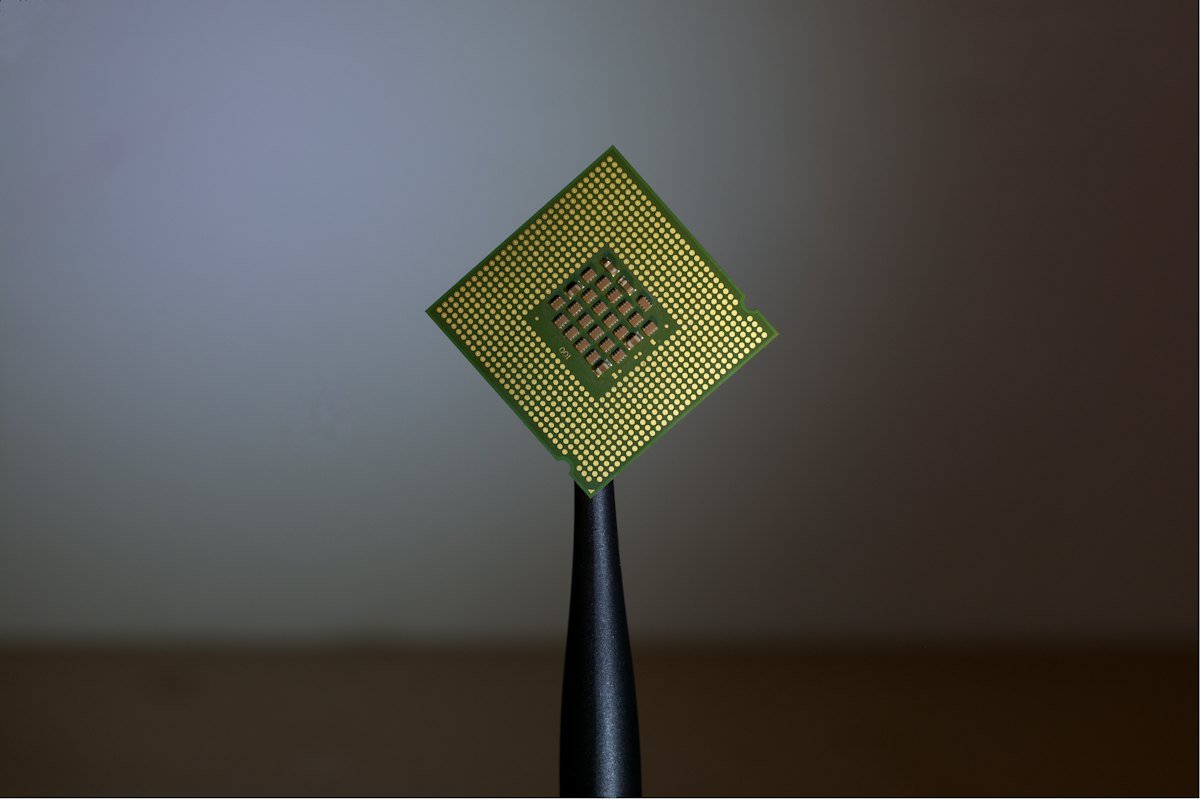
Only x86-64 parts with AVX-512 VBMI. Calif is direct about it: an x86-64 part with that extension is a precondition, and ARM64 chips are not affected at all. The families that qualify are Intel Xeon from Ice Lake onward, which takes in Sapphire Rapids, Emerald Rapids and Granite Rapids, plus AMD EPYC and Ryzen from Zen 4.
That makes a one-line check the fastest triage you have. On Linux, grep /proc/cpuinfo for the flags avx512f, avx512bw, avx512vbmi and bmi2; Calif's rule is that all four must be present for the host to be in scope. Hosts on Graviton, Ampere or an older Xeon never reach the vulnerable routine. OX Security models the gates rather than counting hosts, and its figures put roughly 2,200 of every 10,000 JVM instances past the version, hardware, HotSpot and not-yet-patched tests together, which is 22%.
Why does OpenJDK score it 8.1 when the write-ups say 9.2?
The two numbers come from two different scoring systems. Calif rates CVE-2026-114938 at "9.2 out of 10 (CRITICAL)" under CVSS 4.0. OpenJDK's matrix and Oracle's both give 8.1, because both publish CVSS 3.1. The 1.1-point gap is a measurement difference, not a disagreement about the bug. Horizon3 records the weakness class as CWE-122, a heap-based buffer overflow.
Worth noting what else landed in the same release, because the headline CVE is crowding it out. OpenJDK's risk matrix carries ten CVEs, and Oracle's update carries 11 Java SE patches that, in Oracle's words, "may be remotely exploitable without authentication". Patching for Java4Shell alone and stopping there leaves the other nine in that matrix on the host, the same trap we found in this month's Patch Tuesday counts.
Is Java4Shell being exploited, and is it in CISA's KEV?
No, on both counts as of 18 November. CISA published an alert on 17 November that "strongly urges organizations to immediately patch", with the Canadian Centre for Cyber Security contributing, but an alert is not a KEV entry. The Known Exploited Vulnerabilities catalog, version 2026.11.17, holds 1,782 entries and CVE-2026-114938 is not among them, so no federal remediation clock is running on it.
OX Security reports "no publicly available RCE exploit" and no confirmed exploitation in the wild as of 18 November, and Calif says its per-product chains "stay private" until customers have had time to upgrade. OX estimates under 0.12% of JVM instances worldwide are realistically exposed to code execution and about 0.8% to a remote crash, which is 12 and 80 respectively per 10,000. Those are modelled figures, not counts: OX says no vendor has published absolute numbers, and that treating the gates as independent "likely understates risk".
Which of your Java apps should be patched first?
The ones that decode a token before they know who you are. Calif demonstrated pre-authentication code execution in six products in their default configurations: Keycloak, PingFederate, Jenkins, JFrog Artifactory and Atlassian's Jira and Confluence. Five more needed credentials first: Apache Kafka Broker, Apache Solr, Elasticsearch, Gerrit and Spinnaker. Calif calls both lists "non-exhaustive" and says it also reached code execution in sample apps built on Apache Struts and on Spring Boot, so a product's absence is not a clearance. OX puts the identity layer first, naming internet-facing Keycloak and PingFederate ahead of everything else.
Exposure to the internet is not the whole test. Horizon3 points out that reaching the decoder needs no internet path at all: any internal service decoding untrusted Base64 hits the same code. An internal Jenkins taking Basic auth from the network is in the same class as an external one. Two inventory traps matter. CISA warns that JDKs and runtimes will not always show up as inventory entries of their own, and because Jira, Confluence, Keycloak and Elasticsearch ship their own runtime, OX notes that what java -version prints on the host need not be what the service runs.
What can you do if you cannot patch tonight?
Start the JVM with -XX:-UseBASE64Intrinsics, which drops the hand-written decoder and keeps the rest of the AVX-512 optimisations. The alternative, -XX:UseAVX=2, switches off AVX-512 altogether; apply it only on x86-64, because Calif warns an ARM JVM does not know the flag and refuses to start with it. Confirm what a live process picked up with jcmd <PID> VM.flags -all, as Horizon3 suggests.
Neither flag is a fix, and neither is blessed. Horizon3 is explicit that Oracle publishes neither one "as a supported workaround". CISA's own stopgap sits at the application edge: validate Base64 input "at the application boundary", cap its size, and cut unauthenticated access to the service. Do not count on your proxy either. Calif concluded that "request buffering is not a general mitigation", since Elasticsearch runs the chain from one complete request and buffering stops applying after a WebSocket upgrade.
What should IT teams do about Java4Shell today?
- Run the four-flag
/proc/cpuinfocheck across your fleet first. Hosts missing any ofavx512f,avx512bw,avx512vbmiorbmi2are out of scope, and that is usually the fastest way to shrink the list. - On the hosts that pass, patch to 17.0.21.1, 21.0.13.1, 25.0.5.1 or 27.0.1.1, or your distribution's November build, taking Keycloak, PingFederate, Jenkins, Artifactory, Jira and Confluence before the rest.
- Inventory the runtimes inside products and container images, not just the ones your asset list names. Check what each service actually runs rather than what
java -versionsays on the box. - Where a patch window is days away, set
-XX:-UseBASE64Intrinsicsand verify it withjcmd. Treat it as a holding measure, not a close-out. - Pick up the other nine CVEs in the same OpenJDK risk matrix while the change window is open.
- Watch for unexplained JVM crashes and hs_err_pid logs on exposed hosts, and if you find them, rotate the keys and tokens that JVM held. The window between disclosure and a working exploit is what AI-assisted exploit development keeps shortening.
Sources
- Calif: Java4Shell, Write once, RCE everywhere, 17 November 2026
- OpenJDK Vulnerability Advisory: 2026/11/17
- Oracle Critical Security Patch Update Advisory, November 2026
- CISA alert: Critical Java Vulnerability Requires Immediate Patching, 17 November 2026
- CISA Known Exploited Vulnerabilities catalog, version 2026.11.17, read 18 November 2026
- OX Security: Java4Shell, Easy to Crash, Hard to Exploit, 18 November 2026
- Orca Security: Java4Shell, critical OpenJDK Base64 decoder flaw, 17 November 2026
- Horizon3: CVE-2026-114938, Java Base64 heap overflow, 18 November 2026