News
How fast can AI turn a patch into a working exploit?
GTIG's November 16 report names exploit_agent as the first fully automated case it has seen. The PaperCut campaign it cites began four days after the advisory.
Breaches, vulnerabilities and attacks that affect enterprise IT, and the fixes to install first.
GTIG's November 16 report names exploit_agent as the first fully automated case it has seen. The PaperCut campaign it cites began four days after the advisory.
Crissy Field scanned 159,041 Lovable projects with Handelsblatt. Supabase's October default change does not close tables that are already open, and the breach duty sits with the app operator.

Two Zoom bulletins published on November 10 split the Windows client into four version bands. Only 7.1.8 and later sits outside both.

Microsoft's repair window for the November Windows 11 update closed on Friday 13 November. Its page lists three error codes and one route if the install still fails: a Support case.
Miners landed about five hours after the exploit code went up. Most of the servers that got hit were patched, and the setting both N-able and the researchers point at is one non-default option.
The socket at the center of this one is world-writable and asks no questions. Three grep commands against one log file are where to start looking for abuse.

One exploited Outlook flaw, 63 or 68 critical depending who you read, and a headline number that moves by 160 between vendors. Microsoft's release note explains the spread in two lines, and the spread matters less than which five things you install first.

The new binding directive does two things older KEV listings did not: it shortens the clock to three days for flaws on exposed assets, and it expects you to check whether you were already breached before the patch went on. What that means for a Faspex estate.
The upstream fix landed on November 11. Your distro's may not have. Only servers with HTTP/2 switched on are exposed, so the first job is finding out which ones those are.
An AI agent sat in a WorkOS sales tool for five days before anyone noticed. What it took, the IPs, user agents and TLS fingerprints WorkOS published on Friday, why a clean search is not an all-clear, and the four failures worth checking in your own internal tools.
Only firewalls that send SSL-VPN logins through SAML are exposed, and one menu tells you which ones do. Every affected Gen7 and Gen8 model, the build that fixes it, and the order to patch all seven flaws in Friday's advisory.
A long password opens accounts that are meant to refuse passwords, and on some Alpine cloud images that leads to root. Where musl sshd hides in a typical estate, the fixed Alpine build for each branch back to 3.16, and how to check for a past login.

The firmware Zyxel shipped for the June flaw, and that CISA told agencies to install in September, is the build the attackers' exploit still works on. Which builds close it, and what to look for on a switch that may already have been hit.

The bug sits in WordPress's own update process, so the patch arrives through the code it fixes. Which builds close it, how to confirm a fleet has them, and the web-server rule to add first.

Trigger.dev has not said how the attacker got in or how many customers were hit. Three advisories published on October 21 give self-hosted users a separate reason to be on 4.6.0 or later.

Ivanti's October builds closed the login bypass in an exploited attack chain but left the other two steps open. Those are fixed in 25.1.1.3 and 22.8R2.6. CISA's federal deadline for the worst of them is November 2.

Stolen keys from these platforms were tested within 30 minutes, and two Amazon Bedrock keys ran up more than $100,000 in use at list price, by Wiz's estimate. Revoke at the provider first, then search CloudTrail.

Ubuntu and Red Hat had no fixed kernel as of October 30. The Go team won't change its default, so the check falls to you: find MPTCP listeners, set the Go switch, and reboot into a fixed kernel as soon as one ships.
Broadcom fixed it in July and rated it 2.7, an easy score to pass over. A China-nexus group used it to hide its tracks, CISA set November 11 as the date for federal agencies, and the vSphere 8.0 Update 2 patches do not cover it.
CVE-2026-76418 needs no VPN login, only SSL VPN switched on and secondary authentication set on a tunnel group. CISA set November 1 as the due date for federal agencies. Both versions of Cisco's stopgap cost you something.
Adobe shipped the fix in July and its bulletin still says it knows of no attacks. Sansec counts hundreds of stores hit through the same hole, so patching is the first step, not the last.

The change goes further than last week's block of the eight leaked intermediates. Most machines get it automatically; disconnected ones, and anything that keeps its own trust store, do not.
Microsoft, Node.js and Google have fixes out and proof-of-concept code is public. Updating the operating system's Brotli library does not fix most of the copies that matter.

Kaspersky says APT41 used the Baton Drop flaw against machines that had the fix installed but never activated. Microsoft's KB 5025885 has the steps that close the gap, and the events that prove each one worked.
A read-only tenant login is enough for CVE-2026-114625. On the 5.2 and 6.4 trains one upgrade covers the July, September and October flaws. On 6.1 and 7.0, Arista's own advisories leave a question only its support team can answer.
Every supported line got the fix for the no-login code execution bug. Only 19.3.6 and later got the other 11 fixes, and two of those are rated High.

CISA added both flaws to its exploited list on October 26. The PHP project fixed four branches, and AlmaLinux now ships fixes for every stream, including retired ones.

CERT-In says India's DSC and eSign services are untouched. The damage sits in eMudhra's international TLS and code-signing chain, and Chrome's removal of its root is expected to reach devices on October 27.
None of the flaws is known to be under attack yet. An unauthenticated E-Business Suite bug now has a public write-up, and Oracle wants customers patching every month.
Restores from Cloud Backup are now unavailable too, with no date to resume. Tenants without Entra ID P1 or P2 start losing sign-in logs from October 13, the earliest related activity, on October 20.

Backups stopped on October 17 with no restart date. Microsoft 365's own retention covers deleted mail for 14 days by default and SharePoint files for 93, so the settings you change this week matter.

SaaS tenants are already patched. Self-hosted appliances are not, and Mandiant says any exposed one should be treated as potentially compromised until reviewed.

One email can give an attacker root on an exposed Cisco gateway. The PAN-OS bug needs a login, and Ahsay's first fix for its backup console did not hold.

A Florida court order let Microsoft take over the domains. Its threat report shows how one group took over Microsoft 365 tenants and resold them to phishers.
A Mark of the Web bypass is under attack, Exchange and Active Directory have high-risk fixes, and an Ivanti VPN zero-day arrived the same day.

An Ohio indictment says one network placed workers at more than 70 US companies. The FBI's new alert says the schemes now use more facilitators and smaller farms.

Websites, apps and online ordering stopped at Food Lion, Stop & Shop, Giant Food and Hannaford, and Albert Heijn distribution centers in the Netherlands went quiet.
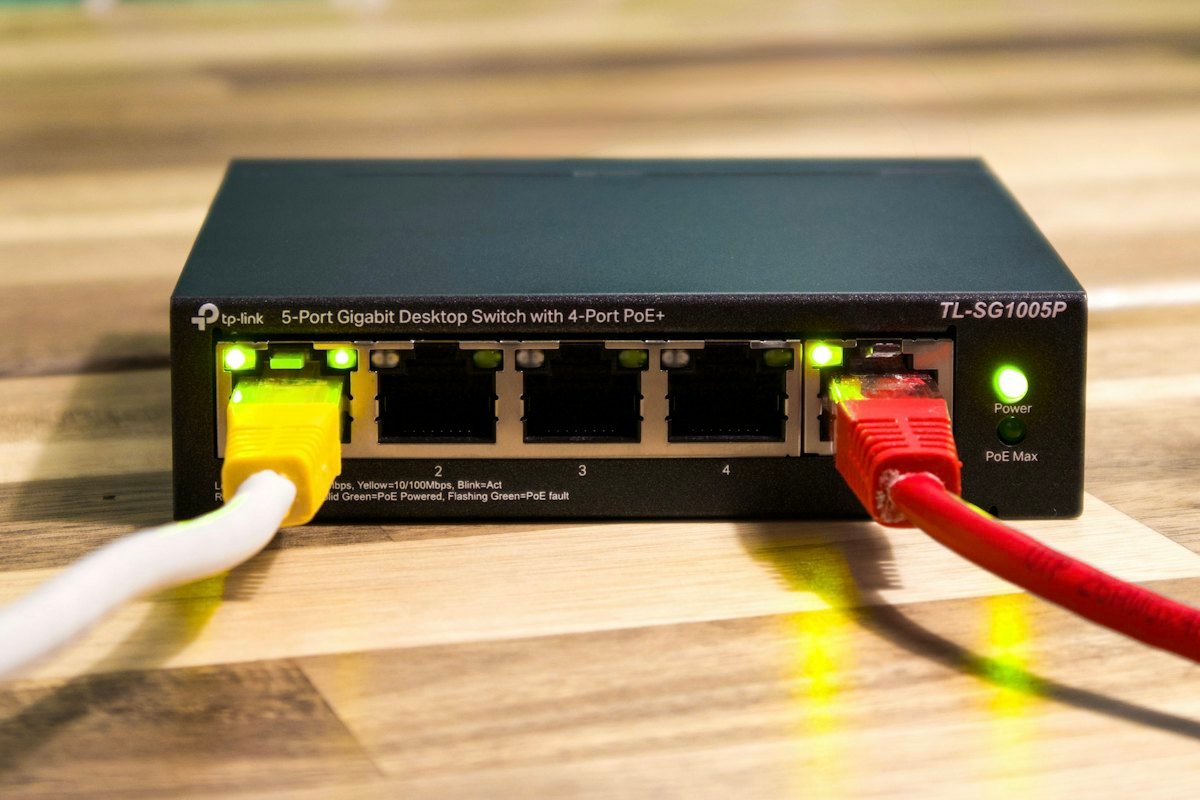
A joint advisory issued on October 6 says the operators sell network access to ransomware groups. No CVE is involved, so a firmware update will not evict them.
Two of the September flaws were exploited before a fix existed, and a SAML bug was used against appliances last week. One upgrade now covers all three bulletins.

Attackers are using AI to work faster, not to invent new attacks. That's the consistent finding from threat reports so far, and it shapes where defenders should spend.

FBI ransomware complaints rose to 3,611 in 2025. The controls that stop most attacks are well known, and most of them are cheap. Here is what to check first.
Most cloud breaches come from settings the customer controls, not from the provider. The NSA's list of ten mitigations is the clearest guide to which settings matter.

An AI system can be attacked through its training data, the models it downloads and the text it reads. Each stage of the pipeline needs its own controls.

Each cloud has its own identity system, logs and defaults. Securing several at once comes down to applying one set of rules everywhere, and the NSA has published a good starting list.

Software vulnerabilities have overtaken stolen passwords as the top way attackers get in, according to Verizon's 2026 breach report. Ransomware shows up in almost half of breaches.

In a factory or utility, the first question in an incident isn't what data was stolen. It's whether the physical process is still safe.
An intrusion detection system watches traffic or hosts for signs of attack. It's an old idea that still catches what endpoint tools miss, especially on devices that can't run an agent.

Since December 2023, a material cyber incident at a US-listed company has a four-business-day disclosure clock. That has moved security from an IT budget line to a board agenda item.

OWASP's 2025 Top 10 keeps broken access control at number one and moves software supply chain failures to third. Here is the list, and what to do about it.

Most attacks on mid-size companies use well-known methods. CIS's Implementation Group 1 is a list of 56 safeguards built to stop them.

A SIEM is only as good as the logs it gets and the people tuning it. CISA's guidance reads like a list of the reasons so many deployments disappoint.

SAST tools scan source code for security flaws before it runs. OWASP's own assessment is that they catch a useful slice of problems, and miss a lot.

NIST's incident response guide went 13 years without an update. The new version treats response as part of everyday risk management, not a separate plan in a drawer.

Laptops and servers are better protected than ever. Attackers have moved to the devices around them: phones, internet-facing appliances and machines no one manages.
Mobile apps put company code and data on devices you don't control. OWASP's mobile standard breaks the problem into eight areas to test against.
SASE combines networking and security into one cloud service. Gartner expects most companies buying SD-WAN to get it as part of a single-vendor platform within a few years.

Migrations create security gaps: temporary access that becomes permanent, test data copied without controls, and old systems left running. Most of the risk can be planned out.

Most attacks now start with a stolen login. CISA's guidance is blunt: SMS codes and push approvals can be beaten, and only phishing-resistant MFA closes the gap.

A SIEM gathers security logs in one place and looks for signs of attack. Whether you need your own depends on who will watch it.